


¡Viva la Vida! center
To regenerate your health by living in harmony with Nature

Natural approaches to cancer by scientists
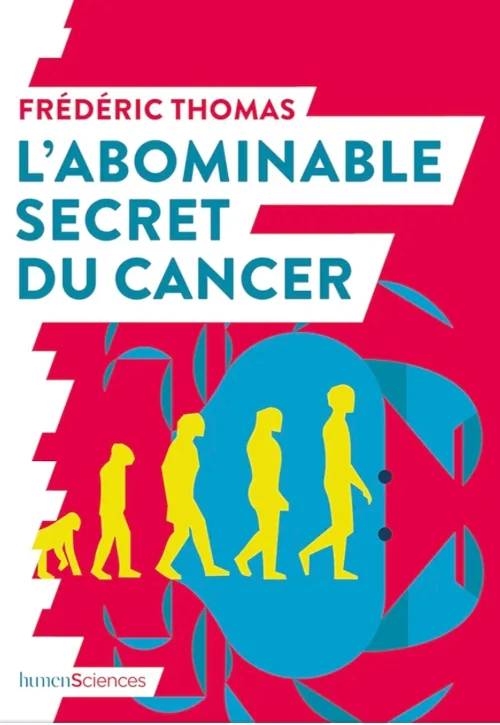
The abominable secret of cancer
When evolutionary biology sheds light on the mysteries of cancer
Introduction
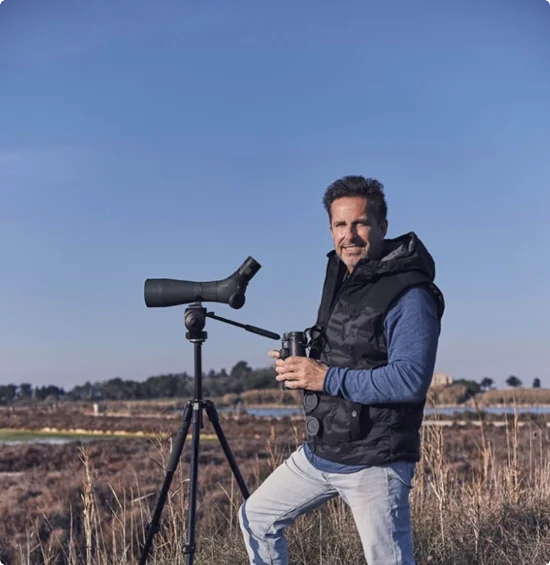
In August 2010, Frédéric Thomas, an evolutionary biologist and research director at the CNRS, lost his mother to cancer. Faced with this personal tragedy, this scientist specializing in the study of parasites and infectious diseases made a decision that would change his career: at 40 years old, he decided to apply the tools of evolutionary biology to this disease affecting millions of people. From this professional shift would emerge a revolutionary understanding of cancer, presented in his book The Abominable Secret of Cancer, published in 2019 and awarded the “Le Goût des Sciences” Prize in 2021. Thomas’s discoveries shed new light on this pathology, revealing a secret that is both terrifying and liberating: modern lifestyles are damaging the human genetic heritage as never before in all of human history.
1. An evolutionary biologist confronted with his mother’s loss
Frédéric Thomas is not a traditional oncologist. Research director at the MIVEGEC laboratory (Infectious diseases and vectors: ecology, genetics, evolution and control) and co-founder of the Center for Ecological and Evolutionary Cancer Research (CREEC) in Montpellier, he built his career studying the interactions between hosts and their parasites, observing how the latter manipulate their victims’ behavior to ensure their survival. Awarded the CNRS silver medal in 2012 for excellence in research, Thomas has published over 340 scientific articles in the most prestigious journals.
When cancer took his mother’s life in August 2010, Thomas felt an unbearable sense of helplessness. Rather than resign himself, he chose to mobilize his evolutionary biologist’s perspective to understand this disease that had defeated his mother. This approach, radically different from that of traditional oncologists who focus on cellular and molecular aspects, consists of observing cancer with the tools of evolutionary biology, ecology, and parasitology. Thomas does not seek to judge existing approaches but to understand cancer in all its complexity, observing it as a biological phenomenon subject to the laws of life.
This humble and rigorous intellectual approach led him to conclusions as disturbing as they are enlightening. Contrary to the widespread image of a modern disease resulting solely from random genetic mutations, Thomas discovered that cancer has a deep evolutionary history and follows the same Darwinian rules as all living organisms. More troubling still, his research reveals that the contemporary explosion of cancer cases is not fate, but the direct and predictable consequence of collective choices concerning lifestyle.
2. Cancer: a 500-million-year-old biological phenomenon
Frédéric Thomas’s first fundamental discovery overturns the usual chronology: cancer is by no means a modern disease. It is an ancient biological phenomenon that appeared more than half a billion years ago, at the precise moment when multicellular organisms emerged at the end of the Precambrian era. The oldest known cancer fossils date back 240 million years in turtles, but the process itself dates back approximately one billion years, when life on Earth evolved from single-celled organisms to complex multicellular beings.
Cancer results from what Thomas calls “cellular betrayal.” For a multicellular organism to function harmoniously, all its cells must respect a pact of cooperation: they renounce unlimited reproduction, specialize to assume precise functions, and accept death by apoptosis (programmed cell death) when it serves the collective interest. This cooperation represents a considerable sacrifice for each cell, which abandons its ancestral “selfishness” for the common good.
But sometimes certain cells, particularly stem cells, break this pact. They stop specializing, refuse cell death signals, and resume their ancestral program of unlimited reproduction. These “rebel” cells return to their unicellular reflexes: they begin to proliferate anarchically, consume the organism’s resources without giving anything back, and can even colonize distant territories by forming metastases. They then behave exactly like internal parasites.
This evolutionary understanding reveals a surprising reality: all human beings carry the beginnings of cancer within them. At every moment, cells mutate and attempt to “go it alone.” Fortunately, the human body has extremely sophisticated natural regulatory mechanisms, selected over millions of years of evolution: immune surveillance, DNA repair, apoptosis of abnormal cells, inhibition of excessive proliferation. Cancer only becomes truly dangerous when these natural defenses are overwhelmed, when rebel cells manage to simultaneously escape all these control systems.
Cancer also affects the entire multicellular animal kingdom: vertebrates (including Jurassic dinosaurs), invertebrates (insects, mollusks), and even certain plants. This universality confirms that cancer is inherent in the very nature of multicellular life, a price to pay for biological complexity.
3. The abominable secret: modern lifestyles are damaging DNA like never before in history
Here is the heart of Frédéric Thomas’s revelation, the “abominable secret” that gives his work its title: never in all of human history has the genetic heritage been subjected to as many simultaneous assaults as in the context of contemporary lifestyles. This rigorously documented observation constitutes the scientific explanation for the current explosion of cancer cases, even among young people and children.
Current lifestyles inflict unprecedented violence on human DNA in multiple forms. Industrial pollutants and chemical additives present in food, air, and water cause continuous genetic damage. Ultra-processed and devitalized food deprives the body of essential nutrients for DNA repair and cellular protection. Constant exposure to electromagnetic waves and endocrine disruptors interferes with cellular regulation mechanisms. Chronic stress, which has become the norm in modern societies, generates silent inflammation that promotes uncontrolled cellular proliferation. Disconnection from nature, sedentary lifestyles, light pollution disrupting circadian rhythms, and depletion of the gut microbiota weaken the body’s natural defenses.
These assaults do not kill immediately. They act in a more insidious way: they cause continuous genetic mutations, gradually weaken DNA repair systems, exhaust the immune system, and create a favorable environment for the emergence of “rebel” cells that escape the body’s control. Each cell division can be marred by errors during DNA copying. Normally, repair mechanisms correct these abnormalities, but when these systems are constantly stressed and weakened by the multiple aggressions of modern lifestyles, errors accumulate.
This observation directly supports Dr. Jean-Pierre Willem’s findings among cancer-free peoples. The Hunzas of Pakistan, traditional Cretans, and Inuit before their westernization had virtually zero cancer rates. Why this remarkable difference? Because their lifestyle did not damage their DNA. Their living, unprocessed diet, rich in protective nutrients, their daily contact with nature, their natural periods of frugality allowing for cellular autophagy, their chronobiologically respectful pace of life, and the total absence of chemical and electromagnetic pollution: all these elements created a protective environment for their genetic heritage.
Cancer is therefore not a genetic inevitability or simply a matter of bad luck. It is the logical and predictable consequence of the lifestyle choices that characterize what is often referred to as “modern civilization” but which, biologically speaking, is highly carcinogenic. The cancer epidemic affecting industrialized societies, statistically affecting one in two men and one in three women, is a warning sign that contemporary lifestyles have exceeded the adaptive capacities of human physiology. Children, the innocent victims of this collective violence inflicted on DNA, represent the most tragic and disturbing manifestation of this social phenomenon.
Frédéric Thomas, with his scientific rigor as an evolutionary biologist, provides academic validation of what Willem and other researchers had observed in the field: cancer is above all a disease of civilization, a direct result of the sudden shift between a lifestyle that has changed radically in a few decades and a human physiology that requires millions of years to adapt.
4. Cancer seen as an intelligent and adaptive evolutionary system
Beyond identifying the causes, Frédéric Thomas offers a revolutionary view of the very nature of cancer. Contrary to the common image of “crazy” cells multiplying anarchically, Thomas demonstrates that cancer is an intelligent system that evolves according to the laws of Darwinian natural selection. Cancer cells are not disorganized: they learn, adapt, develop sophisticated survival strategies, and build resistance to treatments. This is what Thomas calls “the Darwinian enemy”: an adversary that never stands still, but constantly evolves in response to the pressures imposed on it.
Tumors are not simply clusters of cells. They organize themselves almost like autonomous parasitic organs: they develop their own vascular network to feed themselves (angiogenesis), their own metabolism to survive in conditions that healthy cells would not tolerate, and their own strategies to evade the body’s immune defenses. This observation is directly in line with the work of André Gernez, who, as early as the 1960s, identified that cancer stem cells function as an autonomous cell population, obeying their own rules of reproduction and competition, in complete rupture with normal organic cooperation.
This parasitic behavior is based in particular on a radically different cellular metabolism, as demonstrated by Otto Warburg and Laurent Schwartz. Cancer cells abandon normal mitochondrial respiration, which is efficient but oxygen-intensive, in favor of a primitive fermentative metabolism (Warburg effect), which is much less energy-efficient but allows them to survive in hypoxic and acidic conditions that healthy cells would not tolerate. This return to an ancestral metabolism, selected in the Precambrian era when the Earth’s atmosphere was low in oxygen, perfectly illustrates the theory of cancer atavism: cancer cells reactivate very ancient genetic programs buried in their genome.
Genetic heterogeneity within a single tumor is another fascinating characteristic revealed by Thomas. A tumor contains not one but several populations of cancer cells, each of which has accumulated different mutations. This genetic diversity, the result of the genetic instability of cancer cells, gives them remarkable plasticity: when treated, some sensitive populations die, but other populations, which happen to be resistant thanks to their specific mutations, survive and proliferate. This is exactly the process of natural selection described by Darwin: variation, selection, adaptation.
This understanding explains why conventional treatments so often fail in the long term. By seeking to brutally destroy all cancer cells with massive doses of chemotherapy or radiotherapy, intense selective pressure is exerted, favoring the emergence of even more resistant and aggressive cells. A treatment that works brilliantly at first can become completely ineffective a few months later, not because the cancer has “resisted,” but because it has evolved, selecting the cells best adapted to this new hostile environment.
Cancer is therefore not an external enemy to be fought with all-out chemical warfare, but an internal evolutionary drift that requires a more subtle, more ecological approach that is more respectful of the laws of life. In line with Gernez’s insights on the importance of early prevention, Willem’s observations on cancer-free populations, Warburg and Schwartz‘s metabolic discoveries on cellular fermentation, and Geerd Hamer’s work on biological conflicts, Thomas proposes restoring balance rather than seeking to destroy cells within the body at all costs.
5. Toward an ecological medicine that respects life
Frédéric Thomas’s discoveries are not limited to theoretical understanding: they open up concrete therapeutic perspectives that are radically different from conventional approaches. Instead of seeking to “kill” cancer with increasingly aggressive treatments in a logic of total eradication, Thomas proposes adopting an ecological and adaptive approach inspired by an evolutionary understanding of cancer.
Adaptive therapy, a central concept developed by Thomas in collaboration with American researchers such as Robert Gatenby and Alexander Anderson, is based on a simple but revolutionary principle: maintaining an ecological balance within the tumor between sensitive cells and cells that are resistant to treatment. Rather than administering continuous massive doses aimed at total eradication, this approach alternates periods with and without treatment, or adjusts doses according to the tumor’s evolution. When the tumor shrinks sufficiently, treatment is stopped or reduced. When it starts to grow again, treatment is resumed or increased.
This strategy is based on a fundamental ecological observation: resistance to treatment has an energy cost for cells. In the absence of treatment, sensitive cells, which are more energy-efficient, proliferate better than resistant cells. They then compete with each other, limiting the growth of resistant cells. By maintaining this balance, the tumor can be controlled in the long term without selecting increasingly resistant populations. Initial clinical trials, particularly for castration-resistant metastatic prostate cancer, show encouraging results: delay in the onset of resistance from 16 to more than 29 months, with only 47% of the usual drug dose used, significantly reducing side effects.
Other therapeutic avenues are emerging from this evolving understanding: slowing tumor progression rather than seeking immediate eradication, starving cancer cells by modifying their metabolic environment (as proposed by Laurent Schwartz in his work on correcting cellular metabolism), restoring natural physiological balances, and strengthening the body’s defenses rather than weakening it with overly aggressive treatments.
This vision is deeply in line with the approach practiced at the ¡Viva la Vida! center. The goal is not to declare all-out war on cancer, but to provide the body with optimal conditions so that it can regulate these aberrant cells itself. By adopting a carcinofugal lifestyle—a term I have invented and I use to refer to the opposite of carcinogenic, i.e., conducive to the disappearance of cancer—DNA is no longer mistreated and the conditions in which natural defense mechanisms can function effectively are restored.
In concrete terms, this means: eating a living diet, rich in protective nutrients and low in toxic substances; promoting daily contact with nature and exposure to natural light; practicing periods of fasting or dietary restriction to allow autophagy (the process by which cells recycle their damaged components, discovered by Yoshinori Ohsumi, Nobel Prize winner in 2016); drastically reducing exposure to chemical and electromagnetic pollutants; managing stress and emotional trauma (as demonstrated by Geerd Hamer’s work on the biological conflicts that cause cancer); respecting circadian rhythms and chronobiology.
By restoring a healthy environment through detoxification and revitalization, and understanding that cancer is a warning sign rather than an enemy to be defeated, the ¡Viva la Vida! center naturally supports the regeneration of health. Frédéric Thomas’s work scientifically validates, through the rigor of evolutionary biology, what natural health therapists have long observed: cancer thrives in an unbalanced environment and disappears when balance is restored. This is exactly what Willem’s studies of cancer-free peoples demonstrated: their lifestyle naturally created an environment hostile to tumor development.
Conclusion: understanding cancer to find the path to life
The abominable secret revealed by Frédéric Thomas is ultimately not that cancer kills, but that it strangely resembles the lifestyle that generates it: it reflects what living beings become when they cut themselves off from the whole, when the part assumes the right to grow at the expense of the whole, when individual selfishness breaks the pact of cooperation that enables collective life. Cancer cells, by denying their belonging to the organism in order to favor their own proliferation, reproduce on a microscopic scale what modern lifestyles impose on the biosphere: unlimited growth at the expense of global balance.
This profound understanding of cancer as an ancient evolutionary phenomenon, inherent in the very nature of multicellular life but considerably aggravated by contemporary lifestyle choices, calls for a radical change in the approach to this disease. Not by declaring endless war on the body’s own cells, but by restoring the link with the laws of life, respecting human physiology forged by millions of years of evolution, and ceasing to mistreat genetic heritage through an unsuitable lifestyle.
The work of Frédéric Thomas unifies and scientifically illuminates the approaches of all the researchers presented in this section. Warburg and Schwartz revealed the fermentative metabolism of cancer. Gernez identified the role of cancer stem cells and the importance of early prevention. Willem documented the existence of cancer-free peoples and the importance of diet. Hamer highlighted the role of biological conflicts. Thomas, through evolutionary biology, provides the theoretical framework that gives meaning to all these observations: together, they chart the path to a more humble, more ecological medicine that is more respectful of the body’s wisdom.
This is precisely the path that the ¡Viva la Vida! center offers to children with cancer and their mothers: not fighting a disease, but accompanying the return to life by providing the body with the natural conditions in which it was designed to function.

“Our body is a divine, marvelous, and magical creation that was originally designed to function perfectly and enable us to live in excellent health throughout our lives.
If cancer does occur, let us have the humility to recognize that our body may have been subjected to a level of stress beyond what it was capable of handling.
By identifying with honesty and clarity the causes of this terrible disease, it becomes possible to act directly at the root of the problem with awareness, intelligence, and love. It is in this spirit that we can choose to follow the path of natural healing, the path of moving forward in harmony with the laws of life to return to the state of full health that is the birthright of each and every one of us.”
This article was written by Claire Loiseleur, founder and host of the ¡Viva la Vida! Center, whose mission is to help the residents who come to stay there regenerate their health through a lifestyle in harmony with Nature.
To understand what the Centre ¡Viva la Vida! is and how it works, I cordially invite you to:

To see this regeneration in action through videos and real testimonials, I invite you to:
Beyond that, to go further and understand the foundations of the natural health approach practiced at the Center — its principles, its thinkers, and its approach to cancer — I wholeheartedly invite you to:
Here is a list of compelling and evidence-based articles about NATURAL APPROACHES TO CANCER BY SCIENTISTS :
Go to the YouTube channel ¡VIVA LA VIDA! Center – english:

See the Facebook page: The Viva la Vida Center

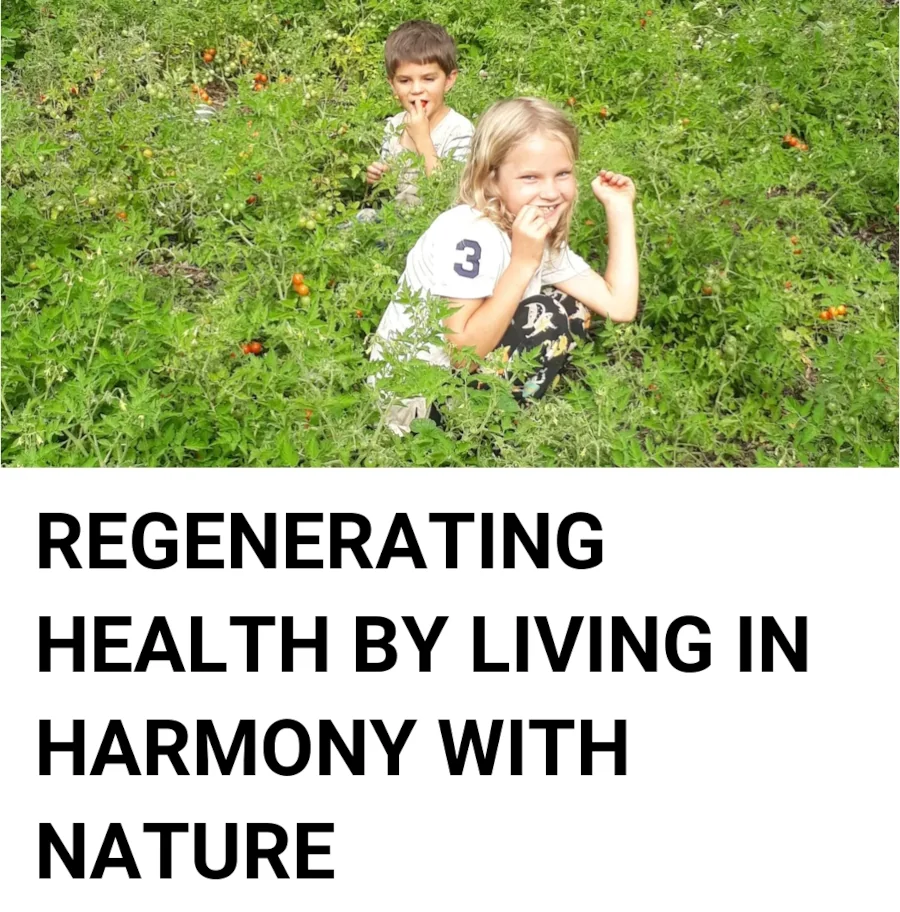
The Facebook group REGENERATING HEALTH BY LIVING IN HARMONY WITH NATURE is a warm and friendly forum for exchange on the theme of Healing pediatric cancer using natural methods. It is open to all parents who have a child with cancer and who are curious to discover the extent to which the keys to natural health can help regenerate their child’s health. The aim is to help each other move forward, beyond the obstacles we face, in order to offer children with cancer natural healing with all the respect and love they deserve.
“Life is a precious gift we receive on the day we are born. Each of us has the power to take care of our bodies, in order to keep them in top shape, regardless of our chronological age. By honoring the life within us with wisdom, awareness, and love, we can treat ourselves to the ultimate luxury of living happily and in good health, throughout our journey on this wonderful planet.”