

¡Viva la Vida! center
To regenerate your health by living in harmony with Nature

Natural approaches to cancer by scientists
Yoshinori Ohsumi’s discoveries on autophagy
The Nobel Prize researcher who brought to light the mechanisms of cellular regeneration
Autophagy, this extraordinary mechanism by which our cells cleanse and regenerate themselves, remained a mystery for decades. It is thanks to the tireless work of a passionate Japanese biologist, Yoshinori Ohsumi, that we now understand the precise workings of this vital process. By elucidating the molecular mechanisms of autophagy, Ohsumi paved the way for a deep scientific understanding of how the body is able to naturally protect itself against diseases, including cancer. His discoveries, crowned with the Nobel Prize in Physiology or Medicine in 2016, reveal how cells possess within themselves a remarkable capacity for self-cleaning and regeneration.
1. A biologist fascinated by the mysteries of the cell
Yoshinori Ohsumi was born on February 9, 1945, in Fukuoka, Japan, in a country still reeling from the upheavals of the post-war period. From an early age, he showed a deep curiosity for the natural sciences. After obtaining his bachelor’s degree in 1967 at the University of Tokyo, he pursued his doctoral studies at this same prestigious institution and earned his doctorate in 1974. Eager to broaden his scientific horizons, he then left for a postdoctoral position at Rockefeller University in New York, where he spent three formative years with biochemist Gerald Maurice Edelman.
Returning to Japan in 1977, Ohsumi rejoined the University of Tokyo. It was in 1988, when he established his own research laboratory, that he made a bold decision that would change the course of his career and, by extension, that of modern cell biology. Rather than following the dominant currents of research, Ohsumi deliberately chose to focus on a subject largely neglected by the scientific community: the physiology of vacuoles in yeast.
His research philosophy was clear and courageous: “do what no one else is doing.” Instead of being guided by the scientific fads of the moment, he preferred to explore the fundamental workings of the cell, even if it meant working in obscurity for years. This singular approach naturally led him to question a mysterious and then largely misunderstood cellular process: autophagy. At the time, this mechanism was considered too complex to study with the tools available. But for Ohsumi, that was precisely what made it fascinating.
2. Identifying autophagy genes: a major scientific breakthrough
In the early 1990s, Ohsumi embarked on a series of brilliant experiments that would revolutionize our understanding of autophagy. To observe this process, invisible to the naked eye, he chose a particularly suitable model organism: baker’s yeast, Saccharomyces cerevisiae. This choice proved decisive, as yeast is a simple organism, easy to manipulate genetically, and whose fundamental cellular mechanisms are very similar to those of human cells.
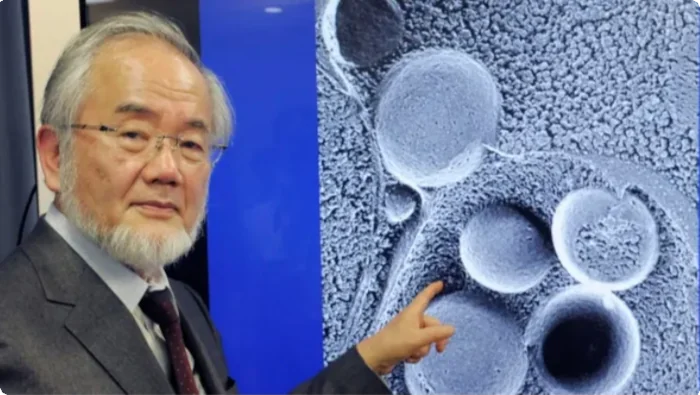
Ohsumi’s ingenuity lies in his experimental approach. In 1992, he created mutant yeast strains lacking vacuolar protease and peptidase enzymes, thus preventing the degradation of vacuole contents. Then, he deprived these yeasts of nutrients, particularly nitrogen, a condition known to induce autophagy. When he observed these yeasts under an optical microscope, the revelation was spectacular: structures called “autophagic bodies” massively accumulated inside the vacuoles, as if the cell had undertaken a major spring cleaning but could not complete the elimination work. These visual observations constituted the first direct proof of the existence of autophagy in yeast.
Bolstered by this visual discovery, Ohsumi then undertook a colossal task: identifying the genes responsible for this process. Between 1993 and 1998, he and his team, initially composed of only three people, conducted methodical genetic screening. They examined thousands of mutant yeast strains under the microscope to identify those that failed to trigger autophagy under nutritional deprivation conditions. This meticulous, almost obsessive work paid off: in 1993, Ohsumi published a seminal article in the journal FEBS Letters in which he described the identification of 15 genes essential for autophagy, which he named APG genes (autophagy), later renamed ATG genes (autophagy-related).
But Ohsumi did not stop there. He then characterized the function of each of these genes. Among his major discoveries, he identified ATG1, which codes for a protein kinase involved in initiating the process. In 1996, his team cloned the ATG5 gene, then ATG6. In 1998, Noboru Mizushima, a postdoctoral researcher in his laboratory, made a stunning discovery: the Atg12 protein forms a conjugate with the Atg5 protein, revealing the existence of a conjugation system similar to that of ubiquitin, a well-known small regulatory protein. That same year, the team published a description of this first conjugation system essential for autophagy in the prestigious journal Nature. In 2000, Yoshinobu Ichimura, another team member, described a second conjugation system involving the Atg8 protein, which binds to a membrane lipid, phosphatidylethanolamine. These conjugation systems proved to be at the heart of autophagosome formation.
Ohsumi’s major scientific feat did not stop with yeast. Very quickly, his team and other laboratories around the world demonstrated that these ATG genes are remarkably conserved across all eukaryotic organisms, including mammals and humans. In 1998, Mizushima identified the human homologues of the ATG12 and ATG5 genes. In 2000, the laboratory showed that LC3, the human version of Atg8, localizes to autophagosome membranes and can serve as a marker for observing autophagy in human cells. This universality of the mechanism is an extraordinary scientific revelation: the autophagy process, unchanged for hundreds of millions of years of evolution, testifies to its vital importance for all complex life forms.
3. Autophagy: the mechanism of cellular cleansing and regeneration
Thanks to Ohsumi’s work, we now understand precisely how autophagy works. The term itself is revealing: “autophagy” comes from the Greek autos (self) and phagein (to eat). It is literally a process by which the cell “eats” itself, but in a selective and intelligent manner.
The autophagy process unfolds in several well-orchestrated stages. It all begins with initiation: in response to cellular stress, such as nutrient deprivation, or following the accumulation of damaged cellular components, a membrane structure called a phagophore begins to form in the cytoplasm. This membrane gradually curves and extends, guided by the ATG proteins that Ohsumi identified. During this elongation phase, the phagophore progressively envelops the elements to be degraded: misfolded or aggregated proteins, worn-out organelles such as defective mitochondria, portions of damaged endoplasmic reticulum, or even intracellular pathogens.
Once the phagophore has completely closed around its contents, it forms a double-membrane vesicle called an autophagosome. This autophagosome, loaded with its cargo of cellular waste, then migrates toward the lysosome (or vacuole in yeast), an organelle containing powerful digestive enzymes. The outer membrane of the autophagosome fuses with that of the lysosome, thus releasing the inner membrane and its contents into this highly acidic environment rich in hydrolytic enzymes. This is where the actual degradation takes place: proteins are broken down into amino acids, membrane lipids are fragmented, carbohydrates are decomposed into simple sugars. These basic elements are then recycled and returned to the cytoplasm, where they can be reused by the cell to build new proteins, new membranes, or to produce energy.
Autophagy is therefore not simply a destruction mechanism, but a truly sophisticated recycling system that allows the cell to maintain its homeostasis, that is, its internal balance. This process is naturally activated during periods of fasting or nutritional restriction, allowing the cell to mobilize its own resources to survive. It also plays an essential role in eliminating intracellular pathogens, such as certain bacteria or viruses, thus contributing to immune defense. Moreover, autophagy protects against cellular aging by eliminating dysfunctional organelles and toxic protein aggregates that accumulate with age. Autophagy is therefore a guardian of cellular quality, a control mechanism that constantly ensures the proper functioning of our billions of cells.
4. Autophagy seen as a natural process for preventing and eliminating cancer cells
Ohsumi’s discoveries have profound implications for understanding cancer. Autophagy plays a dual and seemingly paradoxical role in relation to this disease, but one that is perfectly explained by the logic of cellular physiology.
On one hand, autophagy acts as a powerful cancer prevention mechanism. By continuously eliminating defective mitochondria, mutated proteins, and damaged organelles, autophagy prevents the accumulation of cellular abnormalities that could lead to cancerous transformation. Numerous studies have shown that mutations in autophagy genes, particularly ATG5 or ATG7, significantly increase the risk of developing cancer. Deficient autophagy leads to genetic instability, chronic inflammation, and uncontrolled cell proliferation. Autophagy therefore functions as a preventive quality control system that maintains cellular integrity and suppresses cells with damage that could lead to cancer.
On the other hand, when cancer is already established, autophagy can be exploited therapeutically to weaken cancer cells. This is where Ohsumi’s work provides remarkable insight into the intuitions of other pioneers of natural health. Fasting and calorie restriction massively activate autophagy in all cells of the organism. However, cancer cells, which have a profoundly disrupted metabolism, do not possess the same capacity as healthy cells to adapt to nutritional deprivation. When deprived of nutrients, healthy cells activate their autophagy to recycle their components and produce the energy necessary for their survival. They enter a cellular protection mode that makes them more resistant to stress. Cancer cells, in contrast, with their chaotic metabolism and increased dependence on glucose consumption, struggle to effectively activate these adaptation mechanisms. Fasting therefore creates a metabolic environment in which healthy cells are protected while cancer cells are weakened.
These discoveries by Ohsumi scientifically illuminate what other researchers had intuited or observed with remarkable accuracy. As early as the 1960s and 1970s, André Gernez had identified calorie restriction as a powerful tool for cancer prevention, understanding that periods of frugality allowed the body to eliminate defective cells. Ohsumi’s work, several decades later, revealed the precise cellular mechanism—autophagy—that scientifically validates Gernez’s brilliant intuition. Similarly, the cancer-free peoples studied by Dr. Jean-Pierre Willem naturally practiced periods of dietary frugality that activated this cellular regeneration. Otto Warburg and Laurent Schwartz had identified mitochondrial dysfunction as the origin of cancer: autophagy is precisely the mechanism that allows the elimination of defective mitochondria and the restoration of healthy cellular respiration. Thus, Ohsumi’s work unifies and scientifically validates approaches that, although arising from different contexts, all converge toward the same physiological truth.
In light of autophagy, cancer can therefore be understood as a disease linked in part to a dysfunction of this cellular cleansing mechanism. Stimulating autophagy through fasting or calorie restriction constitutes a gentle, non-violent approach profoundly respectful of physiology to support the body in its natural regeneration. This understanding opens fascinating perspectives for rethinking the support of people with cancer, relying on the body’s intrinsic capacities rather than aggressive external interventions.
5. Autophagy, a precious key to healing children at the ¡Viva la Vida! center
At the ¡Viva la Vida! center, Yoshinori Ohsumi’s discoveries find concrete and daily application. The entire nutritional protocol and lifestyle proposed to children with cancer and their mothers is based on a deep understanding of autophagy and how to activate it naturally and gently.
The diet offered at the center is specially designed to promote autophagy naturally and continuously. It is a diet that I describe as carcinofugal, a term I created that, for me, means “favorable to the disappearance of cancer,” the opposite of carcinogenic. This cancer-repellent diet is based on several fundamental principles that harmonize perfectly with the autophagy mechanisms discovered by Ohsumi.
First, the diet at the center is exceptionally rich in micronutrients: vitamins, minerals, trace elements, living enzymes, phytonutrients. It favors fresh fruits and vegetables, preferably organic, a significant portion of which is produced and harvested directly on site in the fertile gardens of the Pachamama, cultivated using permaculture methods, thus guaranteeing maximum freshness and the total absence of pesticide residues. Freshly pressed vegetable juices, true concentrates of vitality, are offered regularly. Sometimes, sprouted seeds and lacto-fermented foods enrich the meals, providing beneficial probiotics and highly bioavailable nutrients. This nutritional richness deeply nourishes healthy cells, providing them with all the elements they need to function optimally and to successfully carry out autophagy processes.
Secondly, this diet is deliberately low in empty and devitalized calories. Refined products, industrially processed foods, added sugars, and poor-quality fats are avoided. The nutritional approach resolutely favors quality over quantity. By deeply nourishing healthy cells while creating metabolic conditions unfavorable to cancer cells, this diet naturally activates autophagy mechanisms without imposing a strict fast on the body that could be difficult to endure, especially for growing children.
Thirdly, and perhaps most remarkably, meal times at the ¡Viva la Vida! center scrupulously respect the body’s natural chronobiology. There are no stressful time constraints, no artificial obligation to “finish one’s plate” or eat at fixed times dictated by social conventions. Children are invited to listen to their bodies and eat when they feel true physiological hunger, not emotional or social hunger. This approach naturally leads to extended nighttime fasting periods, generally 16 to 18 hours, sometimes even 19 hours between the last meal of the day and the first meal of the next day.
These nighttime fasting periods are precisely what powerfully activate autophagy. As Ohsumi demonstrated, after about 12 to 16 hours without food intake, cells massively launch their self-cleaning process. During these nighttime hours, while the child sleeps peacefully, their body accomplishes extraordinary work: it recycles damaged proteins, eliminates defective organelles, cleanses dysfunctional mitochondria, and progressively destroys cancer cells that are unable to adapt to this intermittent nutritional restriction.
Thus, without even realizing it, without feeling deprived, without conscious effort or suffering, the child’s body daily benefits from this extraordinary capacity for self-cleaning and cellular regeneration brought to light by Professor Ohsumi’s work. It is this gentle, respectful, deeply physiological and scientifically grounded approach that constitutes one of the pillars of the support offered at the ¡Viva la Vida! center to provide children with cancer natural regeneration of their health with all the respect and love they deserve.
Conclusion: the body has the ability to regenerate itself naturally
Yoshinori Ohsumi’s discoveries on autophagy represent much more than a remarkable scientific breakthrough: they reveal the intrinsic wisdom of the human body and its extraordinary capacity to cleanse itself, regenerate itself, and protect itself against diseases. By identifying the genes and mechanisms of autophagy, Ohsumi provided the solid scientific foundations that validate ancestral practices and the intuitions of pioneers of natural health. His work demonstrates that the body possesses within itself the keys to its own healing, provided it is offered favorable conditions for the expression of its regenerative capacities. At the ¡Viva la Vida! center, we put this knowledge to work in service of children with cancer, creating a cancer-repellent environment where autophagy can express itself naturally, thus allowing the body to regain its balance and full health.

“Our body is a divine, marvelous, and magical creation that was originally designed to function perfectly and enable us to live in excellent health throughout our lives.
If cancer does occur, let us have the humility to recognize that our body may have been subjected to a level of stress beyond what it was capable of handling.
By identifying with honesty and clarity the causes of this terrible disease, it becomes possible to act directly at the root of the problem with awareness, intelligence, and love. It is in this spirit that we can choose to follow the path of natural healing, the path of moving forward in harmony with the laws of life to return to the state of full health that is the birthright of each and every one of us.”
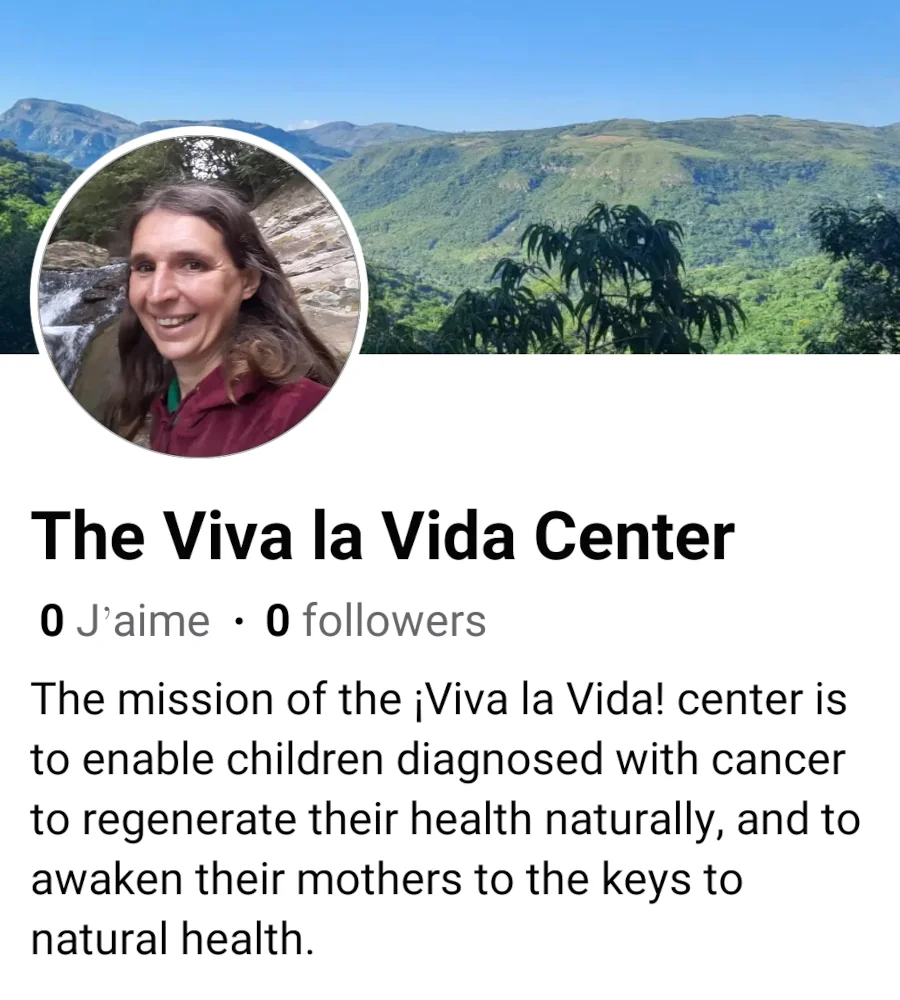
This article was written by Claire Loiseleur, founder and host of the ¡Viva la Vida! Center, whose mission is to help the residents who come to stay there regenerate their health through a lifestyle in harmony with Nature.
To understand what the Centre ¡Viva la Vida! is and how it works, I cordially invite you to:

To see this regeneration in action through videos and real testimonials, I invite you to:
Beyond that, to go further and understand the foundations of the natural health approach practiced at the Center — its principles, its thinkers, and its approach to cancer — I wholeheartedly invite you to:
Here is a list of compelling and evidence-based articles about NATURAL APPROACHES TO CANCER BY SCIENTISTS :

Go to the YouTube channel ¡VIVA LA VIDA! Center – english:

See the Facebook page: The Viva la Vida Center

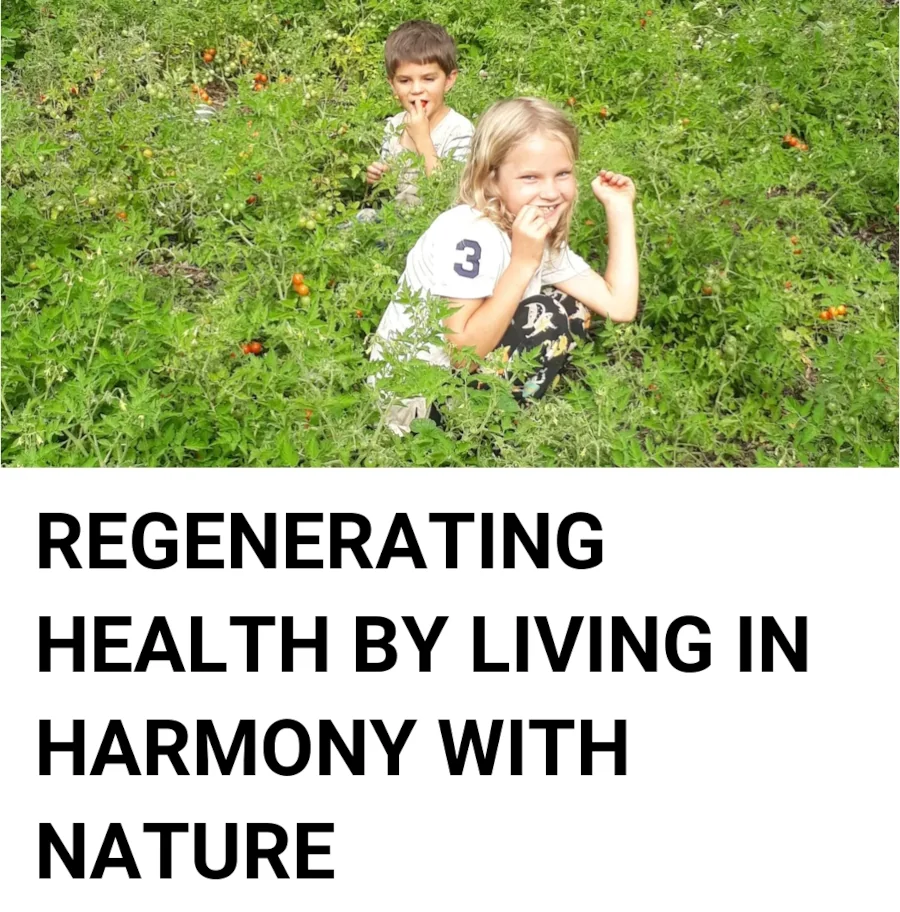
The Facebook group REGENERATING HEALTH BY LIVING IN HARMONY WITH NATURE is a warm and friendly forum for exchange on the theme of Healing pediatric cancer using natural methods. It is open to all parents who have a child with cancer and who are curious to discover the extent to which the keys to natural health can help regenerate their child’s health. The aim is to help each other move forward, beyond the obstacles we face, in order to offer children with cancer natural healing with all the respect and love they deserve.
“Life is a precious gift we receive on the day we are born. Each of us has the power to take care of our bodies, in order to keep them in top shape, regardless of our chronological age. By honoring the life within us with wisdom, awareness, and love, we can treat ourselves to the ultimate luxury of living happily and in good health, throughout our journey on this wonderful planet.”