

¡Viva la Vida! center
To regenerate your health by living in harmony with Nature

Natural health retreats in the heart of the Andes
Food designed to nourish and detoxify
The joy of picking your own food and deeply regenerating your body
At the ¡Viva la Vida! Center, food serves two essential roles. First, healthy and appropriate nourishment is essential for feeding the body’s cells every day with the macro- and micronutrients they need to function well, supplying the body with the energy it needs. Second, it’s just as crucial to help the body get rid of the toxic, unneeded elements that build up and interfere with its functioning. These two requirements — nourishment and elimination — guide how meals are organized at the ¡Viva la Vida! Center.
Two meals a day, in tune with the body’s cycles
Every day, two meals are offered: one at 11am and the other around 4pm, within an eating window of about 6 hours. The rest of the time — roughly 18 hours — the body rests from digestion. This is what’s known as intermittent fasting.
This approach gives the digestive system long stretches of rest, freeing up energy for the body to carry out vital work: cellular cleansing (autophagy) and the elimination of accumulated toxins — a process whose mechanisms were brought to light by Yoshinori Ohsumi’s discoveries on autophagy, which you can explore in the article dedicated to him, and whose benefits I also detail in the article The benefits of fasting for self-healing.
This is why, early in the morning, rather than a substantial breakfast right after waking, I offer only an herbal tea made from garden plants, available freely. This lets the body quietly finish its nighttime detox work — the elimination of toxins being essential to the body’s proper functioning, a subject I explore further in the article Toxin elimination: a vital process. In the same way, avoiding eating too late in the evening supports deep, restorative sleep, during which the body continues to regenerate.
This rhythm comes from decades of my own search for harmony with the body’s natural circadian rhythms — both my own and my young children’s. Science has also shown that the body handles fast-acting sugars better in the middle of the day than in the evening — which is why the 11am meal is rich in fruit, timed for when the body digests it most efficiently. What’s more, eating late at night disrupts sleep and favors storing energy rather than using it — which is why the second meal comes relatively early, followed by an extended overnight fast that gives the body time to regenerate deeply. You can dive deeper into this topic in the article on chronobiology, The importance of respecting biological rhythms.
That said, this framework is always a suggestion, never an obligation. If you feel hungry outside these set times, feel free to grab a piece of fruit or a snack. The ¡Viva la Vida! Center doesn’t impose anything: it offers a rhythm that experience has shown to be beneficial.
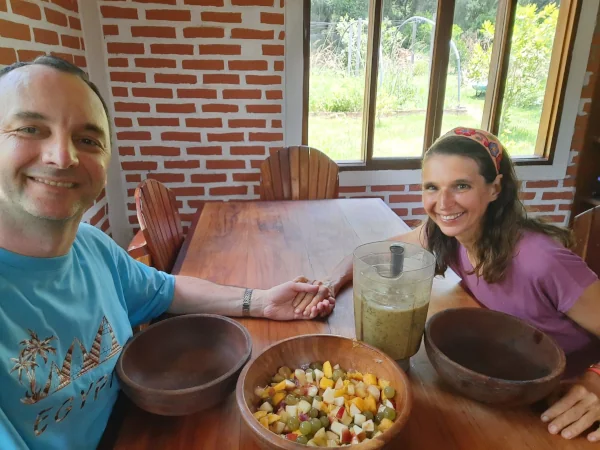
11am: a raw, plant-based meal generous in fruit
The day’s first meal is entirely raw and vegan, designed to offer the body an abundance of vitality in the form of fruit, rounded out with herbs and seeds. It includes four elements:
- fresh fruit to eat straight from the hand, picked on site or chosen at the Samaipata market depending on the season;
- a varied fruit salad, based on what’s being harvested at the time;
- a green smoothie made with banana, lemon, and a bouquet of garden herbs (ginger, comfrey, mint, lemon balm…), a source of minerals that balance out the fruit’s natural sugars;
- raw or soaked seeds (chia, flax, almond, walnut), which provide the fat needed for satiety.
In season, the Samaipata market offers the chance to discover two fruits typical of Bolivia that can surprise newcomers: achachairú (a small orange fruit with juicy, tangy flesh) and jaboticaba, also called guapuru (a fruit with purple skin that grows directly on the tree trunk, and doesn’t keep well after harvest). Several trees of both species are growing at their own pace on the Center’s grounds, and we tend them with care and love until they start producing fruit right here.
Two other treasures, meanwhile, are already being grown at the Center even though they aren’t sold in Samaipata: the Cayenne cherry (a small ribbed red fruit with juicy, fragrant, slightly tangy flesh) and the Brazilian cherry (a black fruit with sweet, melting flesh). These small fruits are known for being rich in antioxidants and vitamins — concrete proof that growing your own food gives access to nutrition that even local commerce doesn’t always offer.
Raising eleven children taught me that kids are naturally drawn to fruit. So when it has to be bought by the kilo, there’s rarely enough to go around. Children are also sensitive, and will often refuse fruit that’s been treated once they taste the chemicals in their mouth. That observation is what made me want to plant fruit trees in abundance, to guarantee fruit that’s healthy, untreated, and picked at full ripeness — a luxury that only Nature, cultivated in keeping with the laws of life, can offer.
4pm: a balanced, nourishing meal built around vegetables
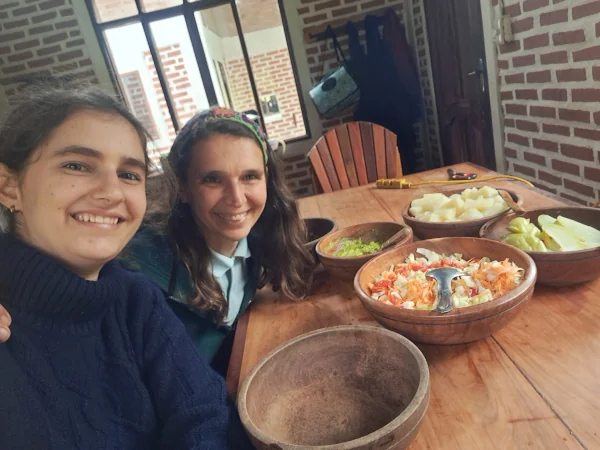
The second meal is savory this time. It’s made up of a variety of foods that are all wholesome, whole, and straight from Nature. This choice is part of a long tradition of thinking about natural nutrition, which you can explore further in the section dedicated to thinkers and practitioners of naturopathy.
This meal has three components:
- raw vegetables: a mixed salad (grated carrot, cabbage, lettuce, tomato, cucumber…), with sprouted seeds (lentils, chickpeas, quinoa) or lacto-fermented vegetables added as desired. It’s served with an avocado, garlic, and fresh garden herb sauce (mitsuba, parsley, cilantro, basil, chives, leek), or a plant-based pâté made from sesame, sunflower, or squash seeds, ground with wild herbs and seasonings;
- cooked vegetables, legumes, and root vegetables: ripe chayote, eggplant, beet, zucchini, or broccoli depending on the season, paired with potato, sweet potato, taro, or cassava for a heartier meal. These can also be steamed or turned into delicious, healthy recipes: falafel, quinoa pastel, vegetable gratin, sonso, lentil pâté, eggplant caviar, mashed vegetables or soup…;
- optional animal products: farm eggs and cheese, bought from traditional Samaipata producers or coming straight from the chickens raised on site at the Center.
Local, seasonal food, chosen with care
The food offered to residents comes in part directly from the Fertile Gardens of Pachamama, the very grounds where the Center is located. A wide variety of fruits and vegetables are grown there using permaculture methods, in living soil rich in microbial life and naturally rich in minerals. The subtropical climate makes it possible to harvest fresh fruit and vegetables year-round, from apples to bananas, along with citrus, avocados, mangoes, peaches, and grapes, not to mention greens and vegetables of every kind. This is how the Center produces untreated food on site that’s genuinely packed with nutrients, including honey and eggs.
Whatever the Center doesn’t yet grow in sufficient quantity is bought at the Samaipata market, where I know the vendors and, sometimes, the growers themselves directly. I consistently favor local, traditional varieties — far less treated than produce from industrial farming.
This standard reflects a deep conviction of mine, one I also share in the article Natural, balanced nutrition: a source of vitality: that living, seasonal, minimally processed food is one of the most concrete pillars of the body’s regeneration.
Food is, in fact, one of the essential pillars of health: it directly shapes how well the liver — the body’s true center of regeneration — can function, and, through the gut microbiome, it shapes how effective the immune system is. I go into more detail on this in the articles The central role of the liver in body regeneration and The role of the microbiome in immunity.
Freedom above all
This eating rhythm comes from my own experience as the mother of a very large family, put to use for residents’ well-being. That said, I’m quite flexible and adaptable, and everyone remains free to adjust this framework to their real needs, always listening to themselves.
If you’d like to see how this approach to food fits into the overall experience offered at the ¡Viva la Vida! Center, take a look at the full presentation guide. If you feel motivated to come experience this way of eating for yourself, you can visit the Rates and dates for upcoming health stays.

“We are all students of life, and the trials we face along our path are opportunities to grow so that we can rise to the challenges that come our way in the best possible way.
If you aspire to regain your original vitality and thrive in a fully healthy body, I wholeheartedly invite you to open your mind and discover the power and safety of naturopathy — this medicine offered to us by God, for Nature comes from God, and our bodies are part of it.
You might then discover, to your surprise and wonder, that our Mother Nature, in all her power and benevolence, has the capacity to offer you a natural regeneration of your health, with all the respect and love you deserve.”
This article was written by Claire Loiseleur, founder and host of the ¡Viva la Vida! Center, whose mission is to help the residents who come to stay there regenerate their health through a lifestyle in harmony with Nature.
To understand what the Centre ¡Viva la Vida! is and how it works, I cordially invite you to:

To see this regeneration in action through videos and real testimonials, I invite you to:
Beyond that, to go further and understand the foundations of the natural health approach practiced at the Center — its principles, its thinkers, and its approach to cancer — I wholeheartedly invite you to:
Here are a few helpful articles to help you understand what the ¡Viva la Vida! Center is all about:
Go to the YouTube channel ¡VIVA LA VIDA! Center – english:

See the Facebook page: The Viva la Vida Center

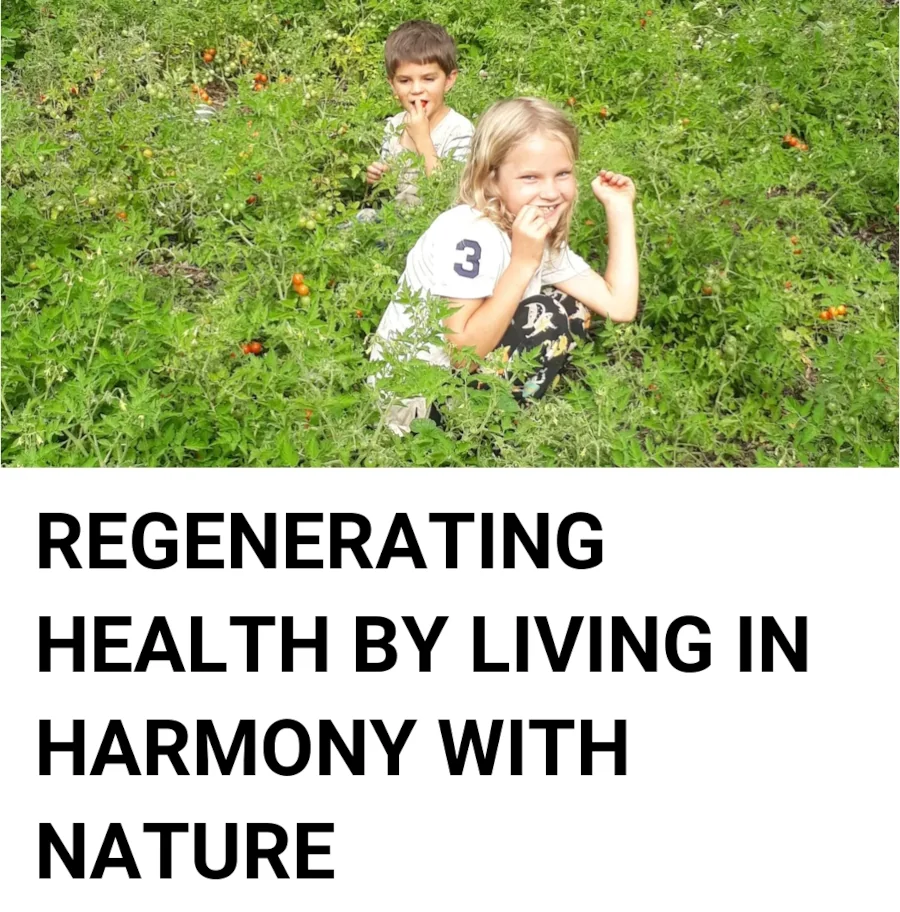
The Facebook group REGENERATING HEALTH BY LIVING IN HARMONY WITH NATURE is a warm and friendly forum for exchange on the theme of Healing pediatric cancer using natural methods. It is open to all parents who have a child with cancer and who are curious to discover the extent to which the keys to natural health can help regenerate their child’s health. The aim is to help each other move forward, beyond the obstacles we face, in order to offer children with cancer natural healing with all the respect and love they deserve.
“Life is a precious gift we receive on the day we are born. Each of us has the power to take care of our bodies, in order to keep them in top shape, regardless of our chronological age. By honoring the life within us with wisdom, awareness, and love, we can treat ourselves to the ultimate luxury of living happily and in good health, throughout our journey on this wonderful planet.”